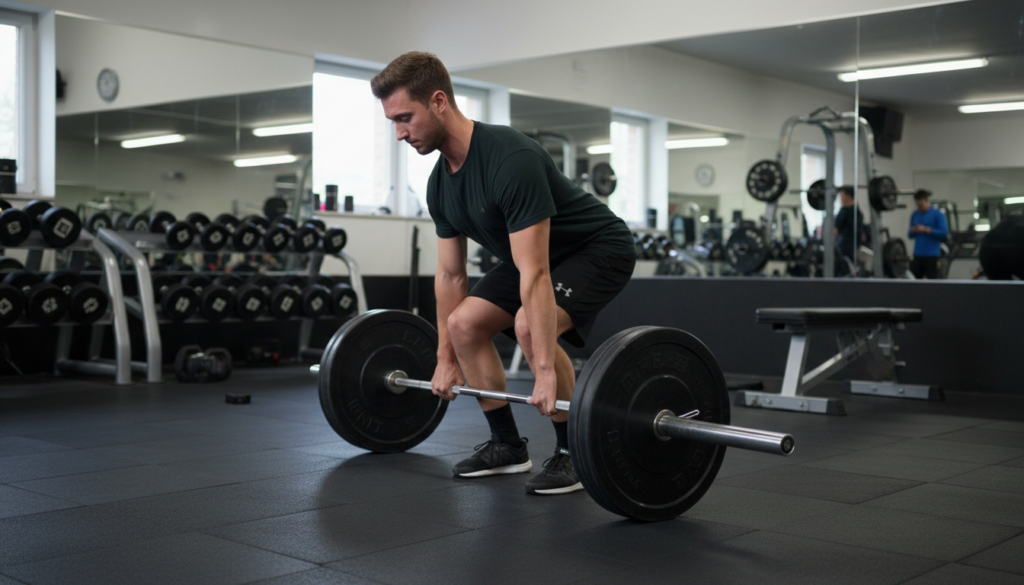
The deadlift It's probably the most complete exercise you can do in a gym. You pick up a barbell from the floor and stand up. It sounds simple, and in essence, it is. However, this movement works almost all the muscles in the posterior chain, from the calves to the trapezius muscles, which is why it's the movement with which you'll lift the most weight in your life.
It's also the exercise that commands the most respect. Many people avoid it for fear of injuring their back. Others do it every week with a technique that does eventually take its toll. In this guide, you'll see which muscles it works, how to perform it step by step, what mistakes to correct, and which variation best suits your goals. By the end, you'll have a clear plan to incorporate it into your routine with confidence and sound judgment.
What is a deadlift and what muscles does it work?
The deadlift is a hip-hinge movement. This means the primary mover is not the knees, but the hips, which close as you lower the weight and forcefully open as you lift it. The bar starts from a stationary position on the floor, without any bounce or momentum, hence the name: each repetition begins from a "deadlift.".
This exercise is one of the three competition movements of the powerlifting, along with the squat and the bench press. Many muscles are involved, and all are important:
- Hamstrings and glutes: They extend the hip and generate most of the force.
- Spinal erectors: They keep the spine rigid throughout the entire range of motion.
- Latissimus dorsi and trapezius muscles: They fix the bar close to the body and stabilize the shoulders.
- Quadriceps: They lift the bar off the ground in the first few centimeters.
- Forearms and core: They support the load and transmit the force without leakage.
No other exercise recruits so much muscle mass at once. That's why the deadlift is so efficient when you have limited time to train.
Real benefits of deadlifting
Beyond the weight loss, this movement offers benefits that are noticeable both inside and outside the gym. These are the most well-supported advantages:
- Global force. Improve your ability to produce force with your whole body at once, something that transfers to almost any sport.
- Stronger back. Strengthening the erector spinae and glutes protects the lower back rather than damaging it, provided the technique is correct.
- Muscle mass. Because it involves so much muscle, it is a powerful stimulus for posterior chain hypertrophy.
- Bone density. High loads are one of the best stimuli for bone, especially after the age of forty.
- A useful pattern in daily life. Lifting a suitcase, a box, or a child from the floor is exactly the same gesture.
Deadlift technique step by step
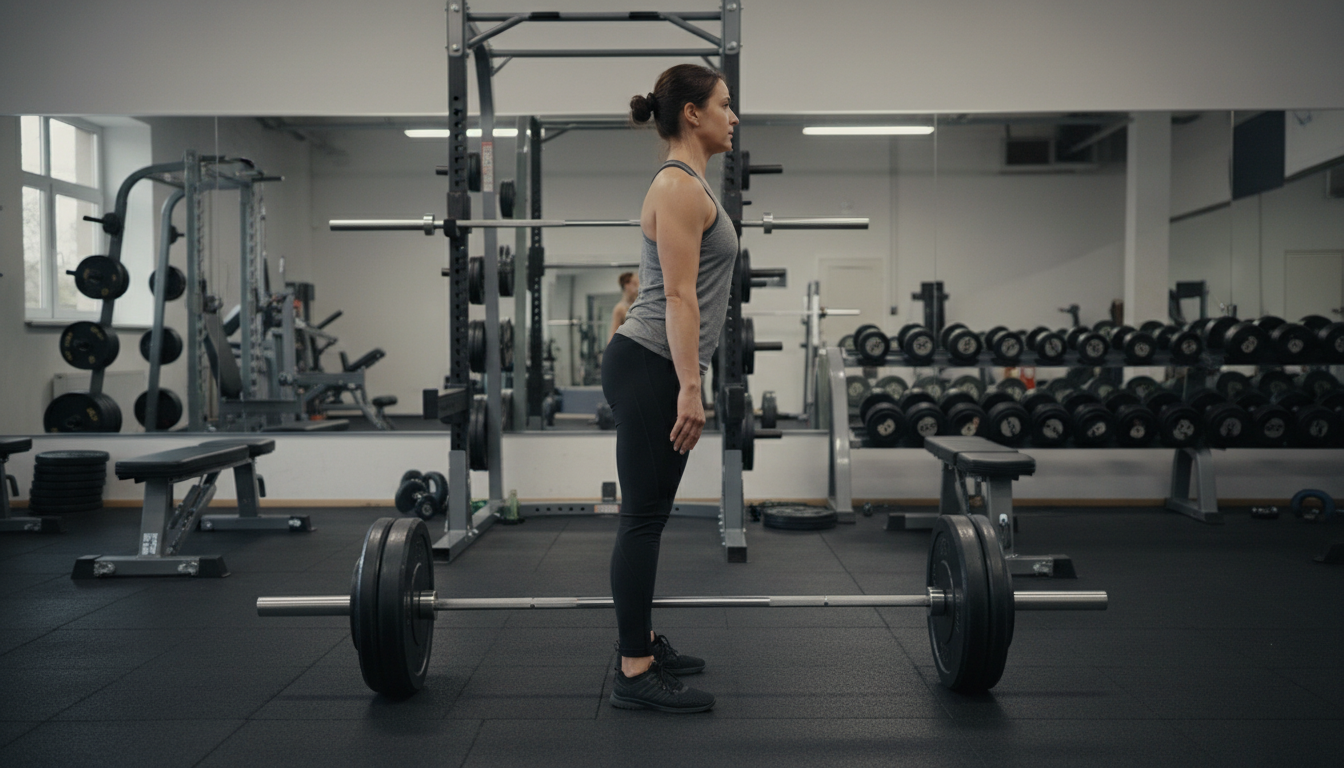
Before you touch the barre, take a few minutes to warm up your hips and get warmed up. If you don't know where to start, you can find a complete guide in our article on How to warm up before strength training. With the body ready, follow this sequence:
- Place your feet. Hips apart, toes slightly turned out. The bar should rest on the middle of your foot, almost touching your shin.
- Go down and grab it. Push your hips back and bend your knees slightly. Grab the bar just outside your legs, with your arms straight.
- Tense before pulling. Stick your chest out, pull in your armpits slightly, and tighten your back muscles. Your back should be flat, neither rounded nor hyperextended.
- Take a breath and lock your core. Breathe in through your nose, fill your abdomen and squeeze as if you were about to receive a blow.
- Push the ground. Don't think about "pulling" the bar. Think about pushing your feet away from the ground as the bar rises close to your leg.
- Block at the top. Extend your hips and knees simultaneously. Squeeze your glutes and stand upright, without pulling your shoulders back.
- Lower while controlling. First, push your hips back, let the bar pass under your knees, and rest it on the floor. Exhale and repeat.
One detail that makes a big difference: the bar should never move away from your body. If it does, the leverage increases and your lower back will pay the price.
Most common mistakes in deadlifts
Almost all the problems stem from the same faults. Check if any of them sound familiar:
- Rounding the lumbar area. The most costly mistake. It usually happens when the weight exceeds your current level. Lower the load and return to a neutral position.
- Starting with the hips too low. The deadlift is not a squat. If you sit down too much, your knees will get in the way of the bar.
- Pull with your arms. Your arms are hooks, not engines. Bending your elbow under load is a fast track to a biceps injury.
- Separate the bar from the body. If it leaves marks on your shin, you're doing well. If it runs diagonally up, you've got work to do.
- Hyperextend upwards. Leaning the torso back while blocking compresses the spine without providing any benefit.
- Bounce after each repetition. The rebound steals your tension and hides your true strength. Support the shot, reset, and shoot again.
If the bar keeps getting stuck in the same spot, it's not bad luck: it's a weak link. How to break a plateau at the gym Do you have specific strategies to attack it?.
Deadlift variations: which one is right for you?
There's no single right way to do it. The ideal variation depends on your anatomy, experience, and goal. This table summarizes the most useful options:
| Variant | Main emphasis | Route | Ideal for |
|---|---|---|---|
| Conventional | Full posterior chain and back | Complete, from the ground up | Maximum strength and overall progress |
| Sumo | Glutes, adductors, and quadriceps | Shorter | Short torsos and sensitive backs |
| Romanian | Hamstrings and glutes | Partial, up to mid-shin | Posterior leg hypertrophy |
| Hexagonal bar | Quadriceps and glutes | Complete, with less lower back stress | Beginners and team athletes |
| With dumbbells | Similar to Romanian, but more stable | Variable | Introduction and training at home |
If you're a beginner, the hexagonal bar or dumbbell version allows you to learn the pattern with less risk. Later, you can move on to the conventional version at your own pace.
How many sets and repetitions to do
The deadlift is very demanding in terms of fatigue, so it doesn't require as much volume as other exercises. A sensible reference point for most:
- Force: 3-5 sets of 3-5 repetitions at 80-90% of your maximum, with 3-5 minutes of rest.
- Hypertrophy: 3-4 sets of 6-10 repetitions, leaving 2-3 repetitions in reserve.
- Technical learning: 4-6 sets of 3 repetitions with light load and perfect execution.
To adjust the percentages, you need a reliable reference point for your maximum. You can estimate it safely using the guide from How to calculate your 1RM. And remember, whatever rank you achieve, progress only comes if you apply... progressive overload week by week.
How MyPeak helps you progress in the deadlift
This exercise rewards patience and punishes improvisation. You need to know what you picked up last week, how you felt, and whether the trend is improving or has stagnated. Jotting it down in a note on your phone is fine, but you lose context after a few months.
With MyPeak You record each set in seconds, and the app does the rest. You see your estimated 1RM updating with each rep, track your monthly tonnage, and get a notification when you've gone too many weeks without making progress. Plus, the AI Coach analyzes your history and suggests when to increase the load and when it's time for an easy week. No social media, no noise: just your data and your progress.
Frequently asked questions about deadlifts
Is deadlifting dangerous for the back?
It's not inherently dangerous. The risk arises when technique fails or when the load increases faster than your capacity. In fact, training with a sensible progression strengthens the muscles that protect the spine. If you have a diagnosed lower back condition, consult a physiotherapist first.
How many times a week can I do it?
One or two sessions per week is enough for most people. If you train twice a week, do one heavy session and one lighter or more technical session. Its recovery time is high, so more frequent training usually does more harm than good.
Do I need a belt and hand grips?
Not at first. Learn to generate abdominal pressure without a belt and grip firmly without assistance. When you're working above 85% of your maximum, the belt will give you some extra stability, and the grips will prevent your grip from limiting your set.
Conclusion
The deadlift isn't just for advanced lifters. It's a fundamental movement that almost anyone can learn, and it offers tremendous benefits in return for two well-executed sets per week. Start light, maintain good back posture, keep the bar close to your body, and gradually increase the weight.
The rest is done with consistency and good record-keeping. Download MyPeak and start keeping track of your sets, your records, and your real progress in the deadlift.