
If I had to choose a single variable The key to determining whether you will gain strength and muscle or not would be this: training volume. Above and beyond rest, rep range, and even exercise selection, the evidence from the last ten years is so consistent that almost no one disputes the assertion: with equal intensity and technique, more well-tolerated volume equals better results.
The problem is that most people who go to the gym don't know how much volume they're doing, let alone whether it's within the optimal range. In this guide, you'll understand exactly what volume is, how it's calculated, how much each muscle group needs, and how to use it to better plan your training weeks.
What exactly is training volume?
There are two legitimate ways to measure volume, and it's important to understand the difference.
- Volume as tonnage: Sets × Reps × Weight. Useful for comparing identical sessions.
- Volume as weekly effective sets: Total number of sets per muscle group performed close to failure (RIR 0-3). This is the most widely used metric today and the one that best correlates with hypertrophy and strength gains.
When coaches today talk about "doing 12-20 sets per week for chest," they are referring to the second concept: effective sets per muscle group per week. This is the unit we will use throughout the article.
Why volume matters more than almost any other variable
The meta-analysis by Schoenfeld and other authors They have repeatedly shown a clear dose-response relationship: more weekly volume (within certain limits) leads to greater hypertrophy and strength improvements. Below a certain minimum threshold, there is no progress; above a certain maximum threshold, the body does not recover and overtraining occurs.
This explains why two people can be doing "similar routines" and get very different results: the real difference lies in how many effective series do they end up accumulating by the end of the week, not whether they do 4x10 or 5x8.
How to calculate your actual weekly volume
The calculation is simpler than it seems. Follow these steps:
- List your exercises by muscle group of the entire week.
- Count only the effective sets (Those you finish 0-3 repetitions from failure). Warm-ups don't count.
- Total per muscle group. Multi-joint exercises partially count for secondary muscles:
- Bench press: 1 full set for chest, 0.5 for triceps and anterior deltoid.
- Squat: 1 full set for quadriceps, 0.5 for glutes.
- Deadlift: 1 full set for hamstrings, 0.5 for glutes and lower back.
- Rowing: 1 full set for back, 0.5 for biceps.
Doing this by hand every week is tedious. That's why MyPeak It includes automatic weekly volume graphs: you record your sets and the app adds up the total volume and by muscle group in kilos and sets, week by week, so you can see at a glance if you are within the optimal range.
How many weekly sets does each muscle group need?
These are the ranges that scientific literature and leading coaches (Helms, Schoenfeld, Israetel, Mike Tuchscherer) usually give as a reference for people who have already passed the beginner phase:
- Chest: 10-20 effective sets per week.
- Back: 12-22 effective weekly sets.
- Quadriceps: 10-20 effective sets per week.
- Hamstrings: 8-16 effective sets per week.
- Buttocks: 8-16 effective sets per week.
- Shoulders (deltoids): 10-20 effective sets per week.
- Biceps: 8-16 effective sets per week.
- Triceps: 8-16 effective sets per week.
Beginners recover very well and progress with the lower end of each range (the lower half). Intermediate users usually need the upper half. Advanced users can tolerate the upper limit, but not consistently throughout the year.
Advanced concepts: MEV, MAV and MRV
Three acronyms that you should understand because you'll see them in any serious program:
- MEV (Minimum Effective Volume): The minimum number of weekly sets required for muscle growth. If you do fewer, you'll maintain your current size but won't progress.
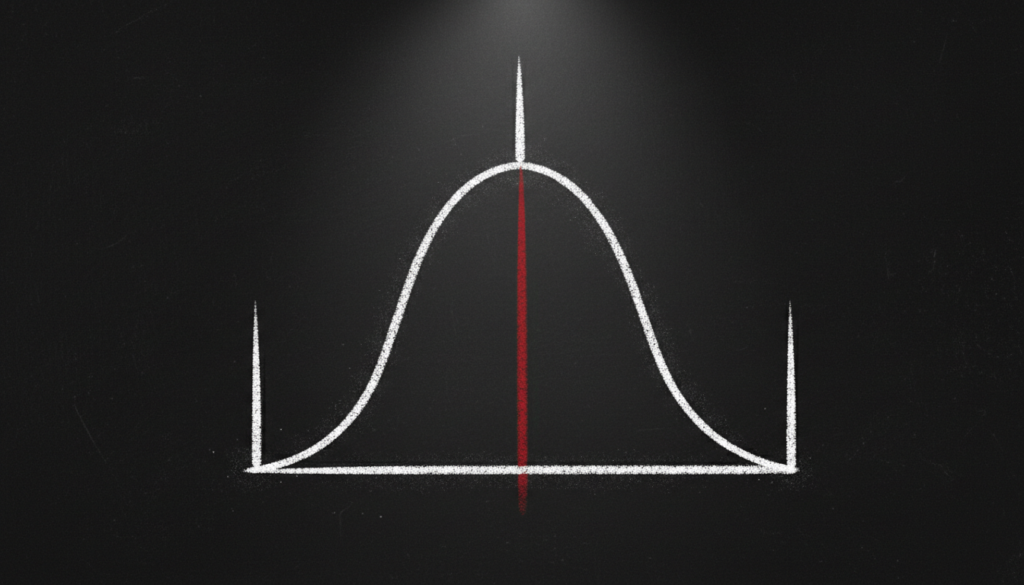
- MAV (Maximum Adaptive Volume): This is the optimal range where you earn the most with the least risk. This is where you should spend most of the year.
- MRV (Maximum Recoverable Volume): That's the maximum you can still recover from. Going beyond it, even in the short term, is playing with fire.
A good periodization It gradually rises from the MEV to the MRV over several weeks, and then drops with a depletion. This is what makes the concept of "mesocycles" work, which many people talk about without understanding what's behind it.
Common mistakes when handling volume
- Count warm-ups as effective sets. Only the series that you finish close to failure count.
- Turning up the volume too quickly. If you did 12 sets for chest this week, don't do 20 next week. Increase by 2-3 sets per muscle group per week, at most.
- Never lower the volume. Without downloads every 4-6 weeks, the system accumulates fatigue and weight loss stagnates.
- Ignore indirect volume. Pull-ups also work the biceps; incline presses also work the anterior deltoid. If you don't account for this, you can easily build too much muscle without realizing it.
- Compare your volume to that of others. What an advanced athlete with good sleep and nutrition can tolerate may be overtraining for someone with less recovery time.
How to apply all this in MyPeak
Keeping track of effective sets, total volume, and muscle group distribution week by week in a notebook or spreadsheet is realistic for a month; after a second, you give up. The sustainable way is to automate it.
In MyPeak have:
- Graphics of Weekly volume per muscle group, in total kilos and in series.
- Automatic trend detection: if your volume has been flat or falling for three weeks, you'll see it on the chart.
- He AI Coach Cross-reference that data with your 1RM and records to detect if you have fallen below the MEV in any muscle group or if you are exceeding the MRV.
If you want to better understand why you haven't made progress in weeks, we recommend you first take a look at How to break a plateau at the gymPoorly managed volume is one of the seven most common causes.
Conclusion
Training volume is the most powerful lever you have to drive your gains. Not the latest exercise craze, not some Instagram athlete's secret routine: it's how many effective sets you do per muscle group per week, within your own MEV-MRV. Start by measuring it, adjust gradually, and reduce it when necessary.
To avoid having to keep track manually, Download MyPeak for free and see how your volume evolves week by week, with clear graphs and no spreadsheets.