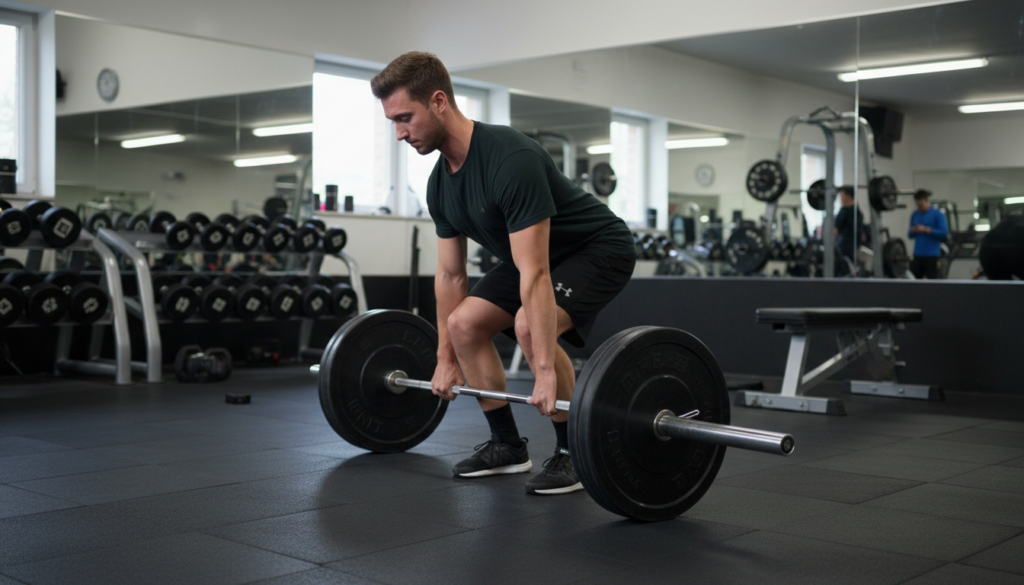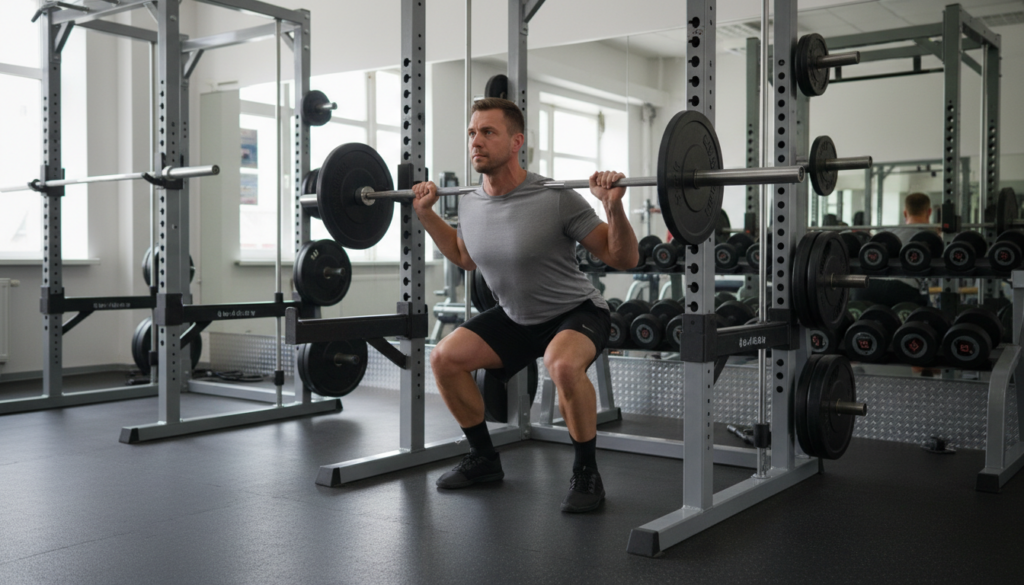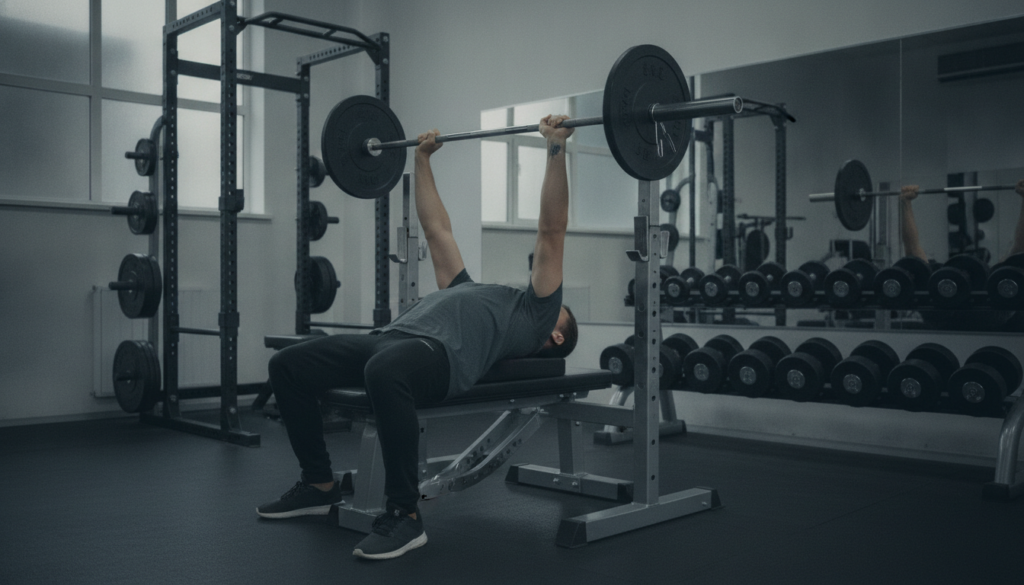
Improve your bench press For many people, it's the number one gym obsession. It's the exercise everyone asks about, the one most often compared, and, ironically, the one where progress plateaus the most. Months go by with them lifting the same weight, and the conclusion is usually the same: "I'm not genetically suited for the bench press.".
It's almost never genetics. It's technique, programming, and a couple of details that no one ever explains. In this guide, you'll see how to position yourself on the bench, how to choose your grip, what mistakes are holding you back, and how to structure your weeks to steadily increase the weight. By the end, you'll have a concrete plan to improve your bench press without injuring your shoulders along the way.
Which muscles does the bench press work?
He bench press It's the great horizontal thrust. It moves the shoulder and elbow simultaneously, thus distributing the work among several muscle groups.
- Pectoralis major: The main motor. Adduct the arm and push the bar upwards.
- Anterior deltoid: It helps with the start from the chest, especially with narrow grips.
- Triceps: He extends his elbow and commands the final part of the movement, the famous block.
- Dorsal and upper back: They don't push, but they create the stable base on which everything rests.
- Legs and buttocks: They provide tension from the ground. Without them, the press loses several kilos.
This explains something important: if your bench press isn't improving, the problem isn't always your chest. Weak triceps or a back that can't support the weight could be the real bottleneck.
Bench positioning: the foundation for improving your bench press
Most people lose 5 to 10 reps of their personal best before even lifting the bar, simply due to incorrect positioning. The correct position provides stability and legally and safely shortens the range of motion. Follow this sequence in every set, including your warm-up.
- Lie down with your eyes under the bar. This way, when you take it out, it stays on top of your chest without you having to move it much.
- Pull your shoulder blades together and down. Think about tucking your shoulder blades into your back pockets. This retraction protects your shoulder and provides firm support.
- Place your feet flat on the ground. Your whole foot or just the toes, depending on your mobility, but always with tension. Push through the floor as if you wanted to slide towards your head.
- It creates a natural arch in the lumbar region. Glutes pressed against the bench, chest high. It's not cheating: it's the strongest and safest position for your shoulders.
- Grip the bar firmly. Wrists straight, bar on the base of the palm. A loose grip takes force and punishes the wrists.
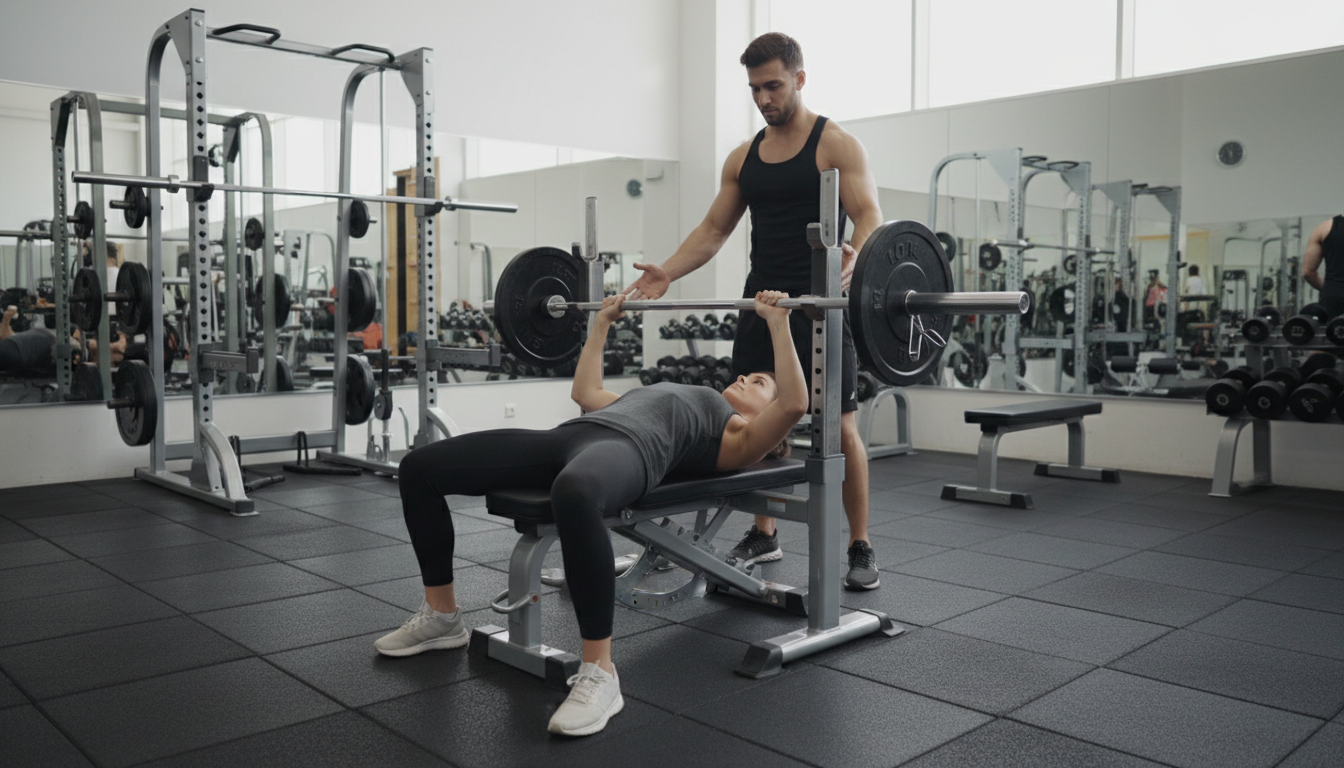
- Take out the bar and lock your elbows. It's best to have a partner help you if the weight is heavy. Let the bar stabilize on your shoulders before you start lowering it.
- Take a breath and lower yourself in a controlled manner. Touch your chest at the level of the lower sternum, without bouncing. Your elbows should be at about a 45-degree angle to your torso.
- Push upwards and slightly backwards. The bar ends over your shoulders, not your face. Exhale as you pass the hardest point.
Repeat this routine until it becomes second nature. Those with a good bench press perform it exactly the same way with 40 kilos as with 120.
How to choose the grip
Grip width changes which muscle is dominant and how much range of motion you use. There's no universal measurement, but there is a clear reference point to start with.
With the bar across your chest, your forearms should be vertical, perpendicular to the floor. If they're angled inward, your grip is too narrow. If they're flared outward, it's too wide. For most people, this coincides with the rough markings on the bar or a finger inside them.
| Grip | What changes | Ideal for |
|---|---|---|
| Width (fingers on the marks) | Less range of motion, more chest and shoulder work | Move the maximum weight possible |
| Halfway (one thumb inside) | Balanced distribution between chest and triceps | Most people and goals |
| Closed (shoulder width) | More range of motion, much more triceps | Strengthen the block and take care of your shoulders |
If you have shoulder pain, tighten your grip slightly and lower your elbows towards your torso. This usually provides relief and also strengthens the triceps, which is something many people lack.
Mistakes that hinder your bench press
These errors occur in any room and explain most freezes. They can all be fixed with a simple signal.
- Elbows open at 90 degrees. It's the "chicken wing" pose. It compresses the shoulder and reduces strength. Tuck your elbows in towards your body, at about a 45-degree angle.
- Bouncing on the chest. Raise the bar a few centimeters for free, but it robs you of the stimulus and can injure your ribs. Pause for a moment at the bottom.
- Lift your glutes off the bench. Abruptly reduce the range of motion and relieve pressure on your lower back. Squeeze your glutes and maintain contact.
- Wrists bent backwards. The bar falls onto your fingers and you lose strength. Place it on the heel of your hand, with your wrist straight.
- Lower the bar to your neck. The point of contact should be the lower sternum. Any higher, the shoulder suffers.
- Always train to failure. Leave some reps in reserve in most sets. If you're unsure how to dose it, check out our guide on RPE and RIR.
Record your heavy sets from the side. You'll see in ten seconds of video what you don't notice under the barbell.
How to program the bench press to gain weight
Technique gets you to square one. To truly improve your bench press, you need a plan that builds stimulus week after week. Here are the rules that work best.
Frequency: Two weekly bench press sessions are almost always better than one. One can be heavy (3 to 5 repetitions) and the other lighter and more technical (6 to 10 repetitions). If you're unsure how to divide your days, see how to organize your training. training frequency.
Progression: applies the progressive overload In small steps. 1.25 kg or 0.5 kg plates are your best friends in this exercise. Increasing by 1.25 kg every two weeks may seem insignificant, but accumulated over months it's the difference between plateauing and progressing.
Accessories: Add dumbbell presses for your chest, direct tricep work (dips, close-grip presses, or extensions), and plenty of rows for your back. The golden rule is to do at least as many pulling reps as pushing reps. Your shoulders will thank you.
Pauses and variations: The two-second pause bench press is the most effective tool against rebound and for strengthening the push-off. The close-grip bench press corrects loose lockouts. Change your training every 4 to 6 weeks and return to the standard bench press to measure progress.
How much weight should you move?
The most frequently asked question in any gym. The honest answer is that it depends on your body weight, experience, and leverage. Even so, these guidelines for adult men can help you get a sense of your needs. For women, subtract approximately 35%.
- Beginner: around 60 to 80 % of your body weight in 1RM.
- Intermediate: between 1 and 1.25 times your body weight.
- Advanced: 1.5 times your body weight or more.
You don't need to test your one-rep max every week to know where you stand. A clean set of 3 to 6 reps and a reliable formula are all you need. Here's how. How to calculate your 1RM without risk.
How MyPeak helps you improve your bench press
Increasing your bench press requires knowing exactly what you did last week: weight, reps, and how hard the set was. MyPeak You register it in seconds, without taking your eyes off the bank.
The app calculates your estimated 1RM for each set, saves your personal records, and shows you a strength analysis for each exercise. This lets you see if your bench press is truly improving or if you've stayed the same for two months. The AI Coach reviews your history and suggests when to add those 1.25 kg and when to hold back. No social network or comparisons: just you, your data, and your progress.
Frequently asked questions about the bench press
Why isn't my bench press going up?
It's almost always for three reasons: unstable technique, lack of frequency, or a specific weakness. If you're struggling with chest exercises, work on the press with a pause. If you're struggling with the lockout, strengthen your triceps with close-grip presses. And if you've been stuck with the same problem for a long time, try some of these ideas for break a stalemate.
Is it dangerous to do bench presses without a partner?
It can be done with maximum loads. If you train alone, use a rack with safety collars adjusted to chest height and never close the collars: this way you can tilt the bar and drop the plates in an emergency. Better yet, ask someone to spot you on heavy sets.
How often can I test my maximum?
Testing every 8 to 12 weeks is sufficient. Testing your actual 1RM is very tiring and provides little new information. In between, rely on your estimated 1RM based on your working sets and rep records.
Conclusion
Improving your bench press isn't about genetics. It's about maintaining the same position every time, choosing a grip that's comfortable for your shoulders, correcting one mistake per session, and gradually increasing the weight. With two well-planned sessions per week, you'll see progress.
What makes the difference is the registration. Download MyPeak, Mark your next series and let the data tell you when it's time to move up.