
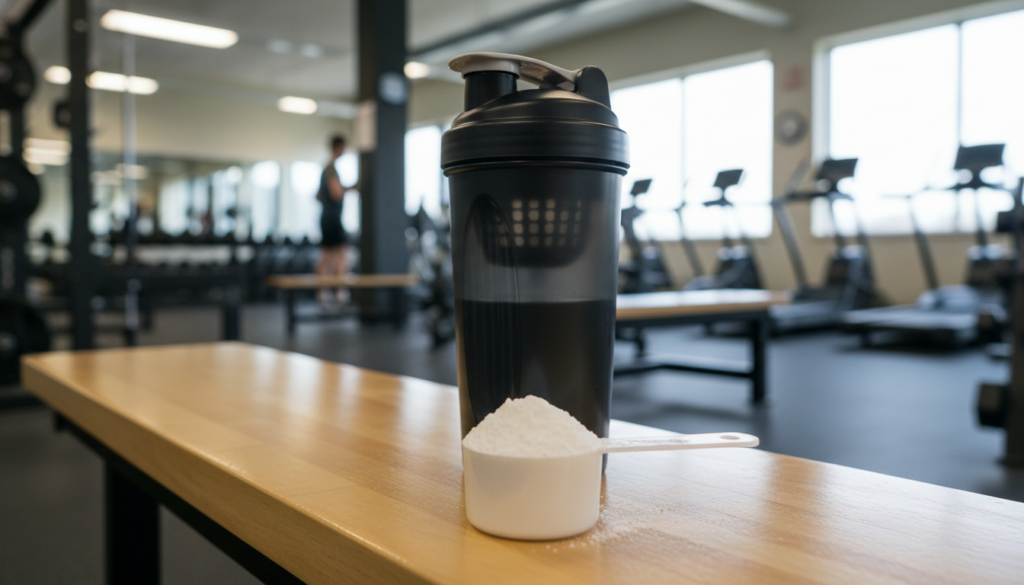
The creatine It's the most studied sports supplement in the world and probably the only one you need to consider if you're strength training. It works, it's cheap, and it's safe, but it's also surrounded by myths that confuse many people.
In this guide we answer all your questions once and for all: what creatine is, what it's used for, how to take it, and why so many studies support it.
What is creatine?
Creatine is a substance your body produces naturally and that you also get from foods like meat and fish. It's stored in your muscles as phosphocreatine and serves as a quick source of energy for short bursts of intense effort, such as a set of squats or a sprint.
When you supplement with creatine, you fully replenish those stores, so your muscles have more energy available for intense training. You can check out their complete chemical definition if you want to delve deeper.
What is creatine used for?
The benefits of creatine are supported by hundreds of studies. The main ones are:
- More strength and power: It allows you to lift a little more weight or do a few extra repetitions, which over time translates into more muscle.
- More muscle mass: directly (better performance) and indirectly (more intramuscular water).
- Better recovery between series and between sessions.
- Cognitive benefits: The evidence points to improvements in memory and mental performance, especially in situations of fatigue or lack of sleep.

How to take creatine?
The creatine you should choose is the creatine monohydrateIt's the most studied, the most effective, and the cheapest. Don't be fooled by more expensive, advanced versions; they're not better.
You have two ways to start:
| Method | Dose | Grades |
|---|---|---|
| With charging phase | 20 g/day (in 4 doses) for 5-7 days, then 3-5 g/day | Fill the tanks faster |
| Without charging phase | 3-5 g/day from the first day | Same result in 3-4 weeks, better tolerance |
For most people, the most convenient approach is to take 3 to 5 grams daily on a consistent basis, without a loading phase. Consistency is key: creatine works because you keep your stores replenished every day.
When should I take creatine?
The time of day hardly matters. You can take it whenever it's easiest for you to remember. If you want to maximize its benefits, taking it after training along with some carbohydrates and protein might offer a slight advantage, but the difference is minimal compared to simply taking it every day.
On days you don't train, take it anyway to keep your levels stable.
Myths about creatine
- It's a steroid: False. It's a naturally occurring molecule in your diet, not a hormone.
- It damages the kidneys: In healthy individuals, long-term studies show no kidney damage.
- It needs to be cycled: There's no need to take a break from creatine. You can take it continuously.
- It retains a lot of water and makes you bloated: It retains some water within the muscle, which is positive; it does not cause the bloated appearance that is attributed to it.
Is creatine safe?
Yes. It's one of the supplements with the best safety profile available, backed by decades of research in healthy individuals. The most common side effect is mild digestive discomfort if you take very high doses all at once, which can be avoided by dividing the dose or skipping the loading phase.
As always, if you have a pre-existing condition, consult your doctor before taking supplements.
How MyPeak helps you check if creatine works
A supplement is only worthwhile if you see results, and for that you need to measure. MyPeak You record your workouts and see in graphs if your strength and your Estimated 1RM They improve after starting creatine.
Creatine gives you the fuel; progressive overload and a good record does the rest. Download MyPeak for free and track your progress with data.
Frequently asked questions about creatine
Does creatine make you fat?
It doesn't cause weight gain in the form of fat. It may slightly increase your weight on the scale due to water retention within the muscle, which is normal and beneficial for performance.
Can women take creatine?
Of course. The benefits are the same for men and women, and it does not cause an increase in male muscle mass.
What happens if I stop taking creatine?
Your stores gradually return to normal levels over a few weeks. You don't lose the muscle you gained all at once, just the small performance boost and some intramuscular water retention.
Does creatine help break a plateau?
It can give you that little boost you need, but it's no substitute for good programming. If you're stuck, check these out. strategies to break a stalemate.
Conclusion
Creatine is an effective, safe, and affordable supplement backed by hundreds of studies. Choose monohydrate, take 3 to 5 grams daily consistently, and forget the myths. It simply offers the best value for money in sports supplementation.
And remember: no supplement replaces proper training and measurement. Track your progress with MyPeak.